ALCÁCER DO SAL :
Guide to A Peaceful Seaside Town

Alcácer do Sal, one of Europe’s oldest cities with a history dating back to 1000 B.C., is a gem of the Alentejo region in southern Portugal.
Located between the Tagus River and the Algarve, this historic town is part of Alentejo; a vast and largely rural area that stretches from the Spanish border in the east to the Atlantic Ocean in the west, covering about one-third of Portugal.
With its rich cultural and monumental legacy, Alcácer do Sal serves as a gateway to this unique and timeless region.

A Brief Look at the History of
Alcácer do Sal
Alcácer do Sal is a town with an extraordinary history, spanning over 40,000 years of human settlement. Archaeological evidence traces its origins back to the Mesolithic Period. While early settlements were abandoned during the Copper Age, the area was repopulated during the Iron Age.
Mediterranean trade, led by the Phoenicians brought commercial colonies to, laying the foundation for its significance around 1000 BC. and it became an important hub due to its strategic location along the Sado River. The town later thrived under Roman rule, becoming a key center salt production and trade, which gave it its name (“Alcácer” derives from the Arabic word Al-qaṣr, meaning “castle,” and “do Sal” refers to salt).
After the Third Punic War and the collapse of Carthage, Alcácer was incorporated into the Roman Empire around the 1st–2nd century B.C. Renamed Urbs Imperatoria Salacia in honor of Salacia, the nymph wife of the sea god Neptune, it emerged as a vital center for the Iberian salt trade and a strategic crossroads for numerous trade routes.
In the late 9th century, the Umayyads established Alcácer do Sal (known in Arabic as Qaṣr Abī Dānis) at the mouth of the Sado River, building it as a fortress to defend against Viking incursions.
Under Moorish rule, Alcácer do Sal flourished as a fortified and cultural center until the Portuguese first conquered it in 1160. It was recaptured by the Moors in 1191 but permanently taken in 1217 during the Fifth Crusade, marking the only enduring conquest of that campaign. A year later, in 1218, King Afonso II entrusted Alcácer to the Knights of Santiago, who governed the region for centuries.
Today, Alcácer do Sal stands as a testament to its rich and layered history, from its early human presence to its time as a Roman trading city, a Moorish stronghold, and eventually a bastion of Portuguese independence. Its cultural and historical legacy is woven into the very fabric of the town, making it a treasure in the Alentejo region.
How to Get There
Stretching along the banks of the Sado River with beautiful views of rice plantations and flocks of flamingos, this city is located 50 minutes from Lisbon Airport (89 km) and just 20 minutes from Comporta Beach.
By Car
- From Lisbon: Take the A2 highway south toward the Algarve. After about 60 km, exit onto the A13 highway toward Alcácer do Sal. The journey takes approximately 1 hour (89 km).
- From Lisbon Airport: Follow the signs to the A2 highway, and then take the A13 exit toward Alcácer do Sal.
- You can check some good rental services here.
By Train:
- You can take a train from Lisbon’s Gare do Oriente station to Alcácer do Sal. Trains from Lisbon to Alcácer do Sal take around 1 hour and 20 minutes. Check schedules with Comboios de Portugal (CP).
By Bus:
- Buses also connect Lisbon to Alcácer do Sal. You can catch a bus from Lisbon’s Sete Rios bus terminal to Alcácer do Sal, with a travel time of around 1 hour and 30 minutes. Bus services are available through various providers and you can browse them here
What to Visit: Alcácer do Sal Highlights:
The town’s cobbled streets wind through whitewashed houses, leading visitors to the beautiful Igreja de Santa Maria do Castelo and the medieval castle, which houses a remarkable museum in its crypt, showcasing 2,700 years of history.
Known for its salt production since Roman times, Alcácer do Sal also delights with its local gastronomy, featuring dishes like migas and freshly caught fish. (See food section for more suggestions). Surrounded by rice paddies, cork oak forests, and the unique natural beauty of the Sado Estuary Nature Reserve, it offers a tranquil escape blending culture, history, and nature.
The Route
Exploring all of Alcácer do Sal on foot in just one day is easier than falling off a log. With most attractions located within close proximity, you can easily see everything the town has to offer. From the start to straight to the Castle (which typically perched on a hill in many other cities) takes no more than 15 minutes. Plus, the predominantly flat terrain of Alentejo makes strolling through the streets a relaxed and enjoyable experience. So, nothing like Lisbon (where 5 minute walk is like a mountain climb due to its hills), don’t worry.
Of course, you can take as long as you want. Remember you’re in Alentejo where the time moves much slower. But for a daily trip I suggest following route.
Riverside Promenade – Alcácer do Sal Riverfront
Camarão de Sado, Iconic Boats
Igreja de Santiago
Right behind the block, you’ll see Santiago Church. Founded in 17th century, this church offers beautiful array of blue tiles and for those who are fond of Portuguese azulejos, I can suggest taking a look at it.
Just take a right either through the arched passageway before you finish the block or take the street (Largo Campos Valdez) at the end of it. It is almost impossible to miss the imposing church towers that stick out behind the block anyway.
Chafariz do Brasão (Coat of Arms Fountain)
After you leave behind the Santiago Church, your next quick stop should be Chafariz do Brasão. (meaning Fountain of Coat of Arms.)
Right above the fountain you’ll see an azulejo panel. Dated 1592, this is one of the most important pieces in Alcácer do Sal as it is a vivid reminder of the Roman times of the city with the inscription that reads “SALACIA URBS IMPERATORIA” (The Imperial City of Salácia).
After Chafariz do Brasão you can either get down to the riverside for a nice and scenic stroll along Sado River and then at the end, you can go up to see the Castle; or you can visit the Castle and come down again to stroll along the river. Either way, it will be an enjoyable route.
I am going with the first option.
Igreja da Misericórdia
If not the rest, this one is totally optional.
Right before you get down to the riverside, there is this 16th century Church of Misericordia, which is inactive right now. Only if you are interested in architecture, you can make a detour to pass by this Church quickly to check the 16th century door which is still preserved today.
Solar dos Salemas (Municipal Library)
Yes, indeed I included a Municipal Library on a travel guide, because this used to be the Palace of Salema family; whose origin dates back to the conquest of Alcácer do Sal. They were one of the most prominent families of the area until 16th century. And this Palace used to belong to them in those years.
Nowadays it is used as Municipal Library but you can quickly visit inside especially to see the patio which features a pretty fountain.
Praça & Museu Municipal Pedro Nunes
The square that is surrounded by government buildings such as the Municipality and Tax Authority, features a statue in the centre which belongs to Pedro Nunes, eponym of the Square.
Pedro Nunes was born in Alcácer do Sal and was the inventor of Nonius, a device that revolutionized navigation by improving astrolabe accuracy during the Age of Discovery.
Right across the Square is Pedro Nunes Museum which is a local history museum established at the building of the old Espirito Santo Church in 15-16th centuries. A nice little museum to quickly visit that contains decorative elements such as the beautiful altar from the time of the Church along with archaeological objects found from the eras of all the civilizations that once settled around the area.
Sanctuary of Senhor dos Mártires
The first headquarters of the Santiago Order, this Sanctuary is located at the end of the riverside blocks a little bit above with a walk of 12 minutes you can reach there.
Do not let the distance intimidate you and try to visit because this is, as well as being one of the oldest Christian temples in the country, it is an archaeological and architectural gem.
Its history dates back to the Iron Age; as a public necropolis. Later it was transformed into a sort of pilgrimage hermitage because it was associated with occurrence of miracles.
Its construction (that gave the shape to today’s Sanctuary) began in 13th Century during the period of Reconquista. Therefore today its structure is consisted of 3 different styles including a beautiful example of Gothic architecture.
Do make sure to pay attention to the details on the walls where you can catch symbols, tablets and reliefs belonging to the Santiago knights. It was also the pantheon of the masters of the Order of Santiago during the Middle Ages. You can still see their tumulus today.
Roman Cistern of Fonte da Talha
This 1st century Roman Cistern lined with Opus Signinum (a building material used in ancient Rome) bears an archaeological importance. Although it is under protection, it was apparently not treated well and subjected to vandalism.
You may want to opt for it only if you have time after all the attractions. It is about 10-15 minutes on foot from the riverfront.
Explore Rio Maior Tours
Accommodation
Though Rio Maior is often seen as a stopover between popular destinations and not a typical staycation choice, staying here can be truly delightful. With natural wonders right at your doorstep, cultural sites, gastronomical delights, delicious wines, the feeling of relaxation that only authentic rural settings can offer, Rio Maior promises a peaceful and rejuvenating getaway.
Plus, did you know you can find unique stays in Rio Maior, like staying in a windmill? Check below for my suggestions for more details:
- Casa do Foral : A charming 19th-century guesthouse that combines rustic architecture with relaxing amenities, including a garden, pool, and communal billiards room. Offers couples a peaceful retreat with free parking, Wi-Fi, and easy access to sightseeing.
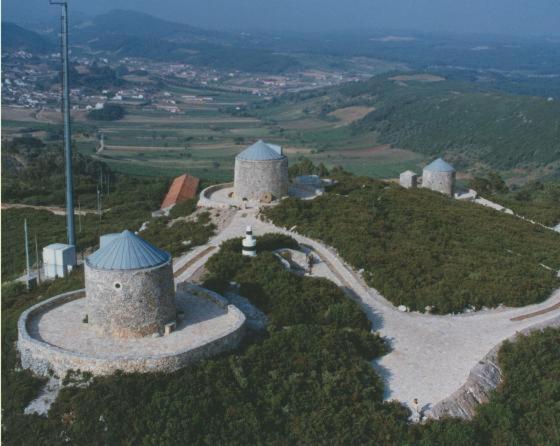
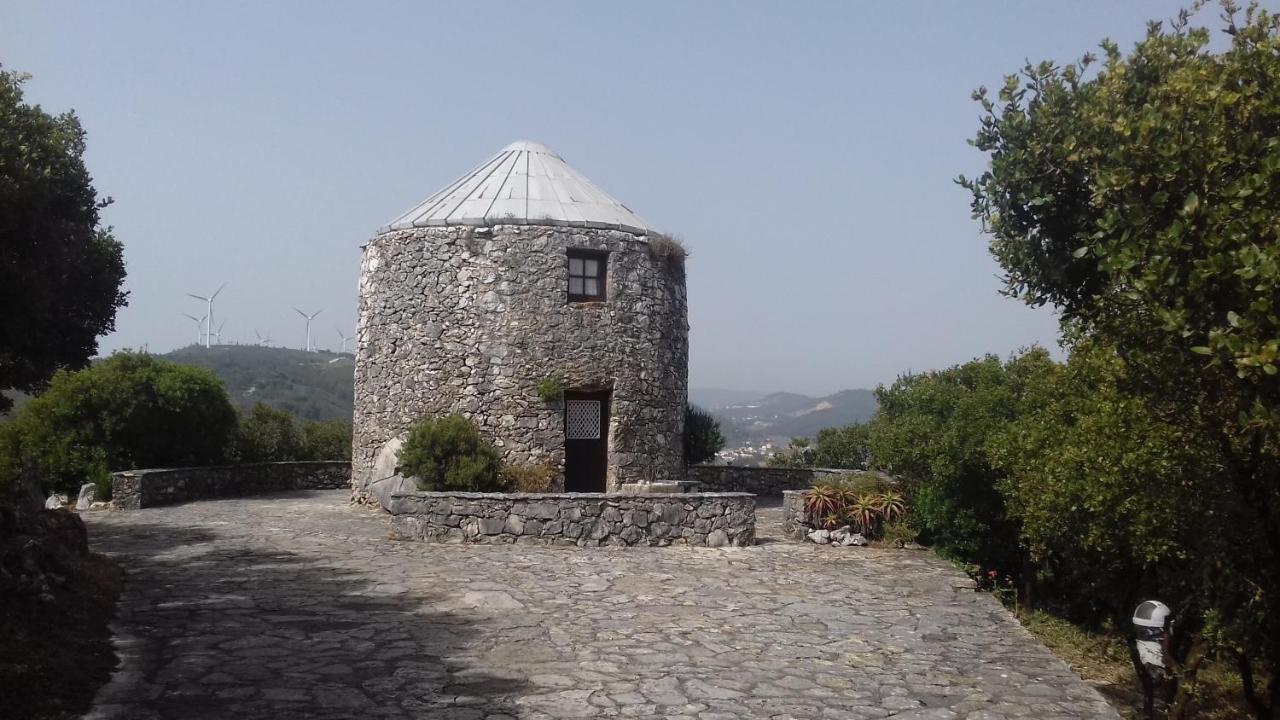
- Cabeço dos Três Moinhos: Cabeço dos 3 Moinhos is a unique accommodation set in three traditional windmills, where guests can experience a charming stay surrounded by panoramic countryside views. Each windmill is thoughtfully converted into a cozy lodging, offering a serene escape rooted in Portugal’s rustic heritage.
- Armazem de Sal: Armazém de Sal in Rio Maior is a stylish loft accommodation, originally a salt warehouse transformed into a modern, open-concept space. Combining rustic charm with contemporary comfort, it offers guests a unique and cozy stay, reflecting the town’s rich salt-mining heritage.
- Pedra de Sal – Hostel & Suites: Pedra de Sal Hostel & Suites in Rio Maior offers a modern and welcoming stay, blending cozy private rooms and dormitory options with shared amenities. Located near the historic salt pans, this hostel provides a relaxing, social atmosphere ideal for travelers looking to explore the natural and cultural highlights of the region
Search Accommodation Deals in Rio Maior
Useful Links & Resources
- Booking.com : For all your reservations in a faster, safe and secure way.
- GetYourGuide: For the best tours around attractions and having fun activities. You can also skip the lines by purchasing tickets to the main monuments in advance.
- TripAdvisor: You can find diverse arrange of tours, activities and restaurants in and around Rio Maior.
See all my TRAVEL RESOURCES & TOOLS to plan your trip.
How did you find Rio Maior? Is it a destination you’d like to visit? Don’t forget to share your comments with me and this guide with somebody that you’d like to take with you.

A Portal to Japanese Streets Through The Heart of Portuguese Riviera: Izakaya Cascais
In the sun-soaked streets of Cascais, lays a hidden portal that opens straight into the bustling alleys of Tokyo with its delectable delights: Izakaya Cascais

Porto Ultimate Travel Guide
Porto, Portugal’s second-largest city, is a captivating blend of historic charm and modern vibrancy. Everything you need for an unforgettable Porto trip is here in this travel guide >>>

The Purple Shawl Of Lisbon: Jacaranda Mimosifolias
The season has come. Every year, around late spring, Lisbon veils herself with a beautiful purple shawl: Jacaranda Mimosifolias.

The Oldest House in Lisbon That Survived The Great Earthquake of 1755
500 year-old house, stands as a testament to the Lisbon’s enduring history in the heart of the second oldest neighbourhood of Europe, Alfama.


 TR
TR  ENG
ENG